Fresh Pasta Recipe with Tips & Techniques
Pasta is perhaps the most versatile ingredient at a cook’s disposal… a blank canvas on which you can paint nearly any culinary picture of your liking.
From hearty meat ragus, to simple vegetable mixtures, to unctuous creamy sauces, or just a simple mix of tomatoes and basil, pasta in both noodle or stuffed form can offer an endless menu of delights.
Which is why knowing how to make fresh pasta is such an important part of any home cook’s toolkit. With just three ingredients that you likely already have on hand, you could have the foundation for any number of easy weeknight meals ready to go with just a few minutes of effort.
What’s the difference between fresh and dried pasta?
Dried pasta is generally made from a mixture of water and semolina dough, produced into a variety of shapes in pasta factories using bronze-cast dies. This includes your pantry staples like spaghetti, linguini, rigatoni, and elbow macaroni.
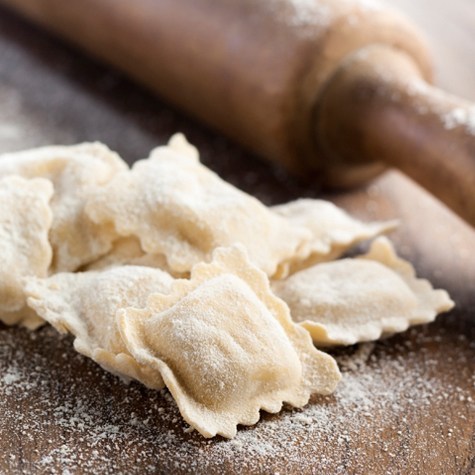
Fresh pasta is typically made using flour and egg, which is rolled out and used to create wider noodles like pappardelle, tagliatelle, and fettucini, as well as the sheets needed to make stuffed pastas like ravioli, agnolotti, and tortellini.
Is fresh pasta better than dried pasta?
Fresh pasta isn’t necessarily better than dried. There’s a misconception that just because fresh pasta is made by hand at home that it’s immediately better than buying pasta in a box at the store.
It mostly depends on the use. Sometimes you want the firmer texture of dried pasta, while other times you may want the rich, fattiness of an egg-based noodle. Timing is also a factor. Dried pasta takes longer to cook, but is faster to get into the water. Fresh pasta takes time to make, but cooks quickly.
But it’s exactly the time spent making fresh pasta that gives it a special place in a cook’s heart. The hands-on satisfaction of mixing, kneading, and making pasta dough is an addictive experience that some refer to as “pasta therapy.”
Is making pasta hard?
Well, it’s certainly a more involved process than just opening a cardboard box of dried pasta. But that doesn’t mean it’s “hard.”
Before the Food Network, blogs, or influencers made it a trend, millions of Italian nonnas have made pasta at home on a nearly daily basis as a practice that has spanned generations. An activity like that doesn’t gain that kind of widespread adoption or longevity by being hard.
We’re talking three ingredients and roughly 20 minutes of time. It just takes a little practice to get started. The good news is that it's fun. And even if your first go isn’t perfect, you’ll still have something to eat at the end of it.
The trick is to keep it simple. Too many recipes try to get too fancy too fast, with confusing mixes of yolks and whole eggs, or yolk only, and so on. For those new to pasta, the key is to find a recipe with the highest chance of success.
At the Cook Street School of Culinary Arts, we’ve perfected the beginners pasta dough recipe, which we’ve optimized for flavor and flexibility, but also to ensure the greatest chance of success so that students won’t get discouraged right out of the gate.
Like any journey, it begins with the first step.
Fresh Pasta Dough For Beginners
Ingredients
1 egg
1⁄2 c “00” flour
1⁄2 c. semolina
1⁄2 T olive oil
p. Salt
We use a mix of soft 00 flour and coarser semolina flour to produce an end result with more structure and bite to it than a purely 00 mix could accomplish.
Mixing
Lightly beat the egg with water, oil, and salt.
Combine the flours and shift into a pile on a wooden work surface, like a cutting board. Make a well in the center.
Using a fork or your fingers slowly stir the egg in the well gently pulling in flour as you go.
When the mixture becomes too stiff for the fork, switch to your hands or a bench knife/bowl scraper and continue incorporating the flour gradually. You will likely have some flour left over. Just keep adding flour a little at a time until the dough is no longer sticky and a soft dough is formed.
Kneading
Clean your work area making sure that any hard flour bits are removed and the clean flour is off to the side.
Pat the dough ball in the flour and knead until completely incorporated, continue this
process until the dough is soft and supple.
The point here is to develop gluten and fully incorporate the moisture and fat from the egg.
If you feel like you’ve mixed in too much flour and the dough feels tough and difficult to knead, wrap the dough in plastic and let it sit in a fridge for 20-30 minutes to relax. Then return to kneading.
Resting
Once you have a nice, soft ball of dough that springs back quickly when you press a finger into it, it’s time to let it rest. This is a critical step that should not be rushed, as the dough needs time to relax and incorporate all the ingredients put into it.
Cover the dough with plastic wrap and let it rest at room temperature for at least 30 minutes.
Rolling
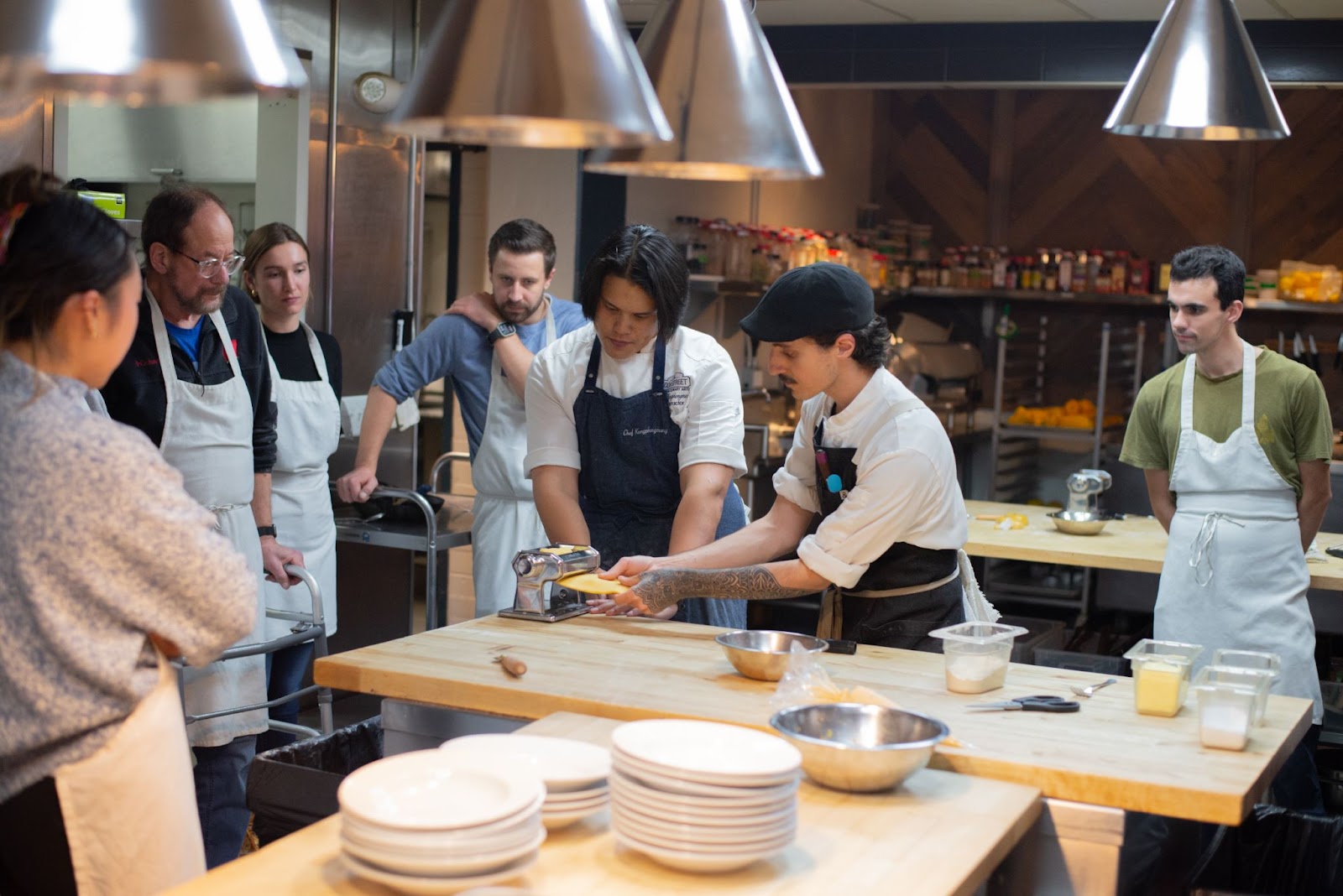
The easiest way to roll out dough is using a hand-cranked pasta machine like a Marcato, or the hands-free Kitchen Aid pasta rolling attachment.
Once your machine is set up, unwrap the resting dough and shape it into a flat disc. (This recipe is good for one portion of pasta, and thus doesn’t require cutting the dough into smaller pieces first).
Run the dough through the starting setting in your roller (this is typically marked as “0” on your device). Set the roller to the next highest setting (“1”) and run it through again.
Fold the ends of the dough sheet so that both ends meet in the middle. This squares off the ends and creates a neat rectangle. Return the pasta machine to the 0 setting and roll the newly shaped sheet of dough through.
Continue running the sheet through the pasta machine, increasing the setting up by one step until you reach the third highest setting of your machine.
You know have a sheet of fresh pasta dough ready to used however you desire: either cut into noodles or folded over the stuffing of your choice.
A note about cooking times.
Cooking time will depend on the kind of pasta you made. But in general, fresh pasta cooks far quicker than dried. We’re talking 3 - 5 minutes. The water should not be at a roiling boil, but rather a gentle simmer. Yes, you should generously salt the water, but it doesn’t need to “taste like the sea” as some have advised.
Cook Street Pasta 101 Classes
Making fresh pasta is a skill handed down from generation to generation, as much of it requires developing a “feel” for the dough. For those of us without an elder to show us how to develop that feel, Cook Street’s experienced chef instructors can guide you through the process in our beginner pasta making class.
Italian and French cuisines and techniques are the foundation of the Cook Street School. We’ve enjoyed long-standing relationships with schools in both Italy and France to form the core structure of our curriculum, and our highly trained chef instructors have extensive experience with pasta, including working the pasta production line at several of Denver’s top Italian restaurants.
Not only will you learn how to develop the right feel for pasta dough, and learn how to navigate the pasta machinery and cutting techniques, we’ll also take the next steps of making sauces as well as the filling for stuffed pastas, and more.
Why Join Our Cooking Class?
Spots are filling fast! Don’t miss your chance to elevate your pasta game.
